

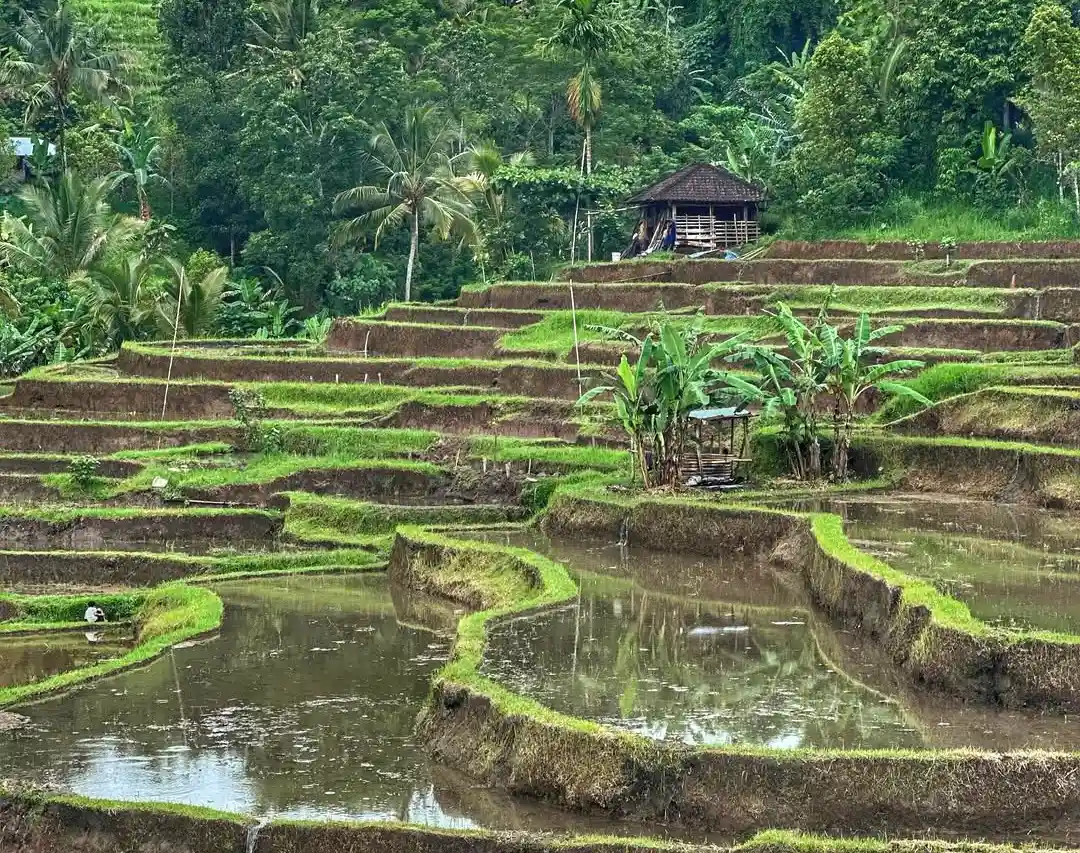
Located in central Bali, Jatiluwih Rice Terraces is a UNESCO World Heritage Site that offers vast, serene landscapes and a rare glimpse into traditional Balinese farming life. Far from the beach crowds and touristy spots, this area lets you experience the island's ancient subak irrigation system while breathing fresh mountain air.
Why Jatiluwih Rice Terraces is special
Jatiluwih covers over 600 hectares of working rice fields, all sustained by the traditional subak irrigation system. Unlike the busier Tegalalang, here you’ll find authentic Bali: quiet walking trails, farmers at work, and breathtaking vistas that stretch for miles. It’s not just for photos—this is a living cultural landscape.
Where to find Jatiluwih Rice Terraces
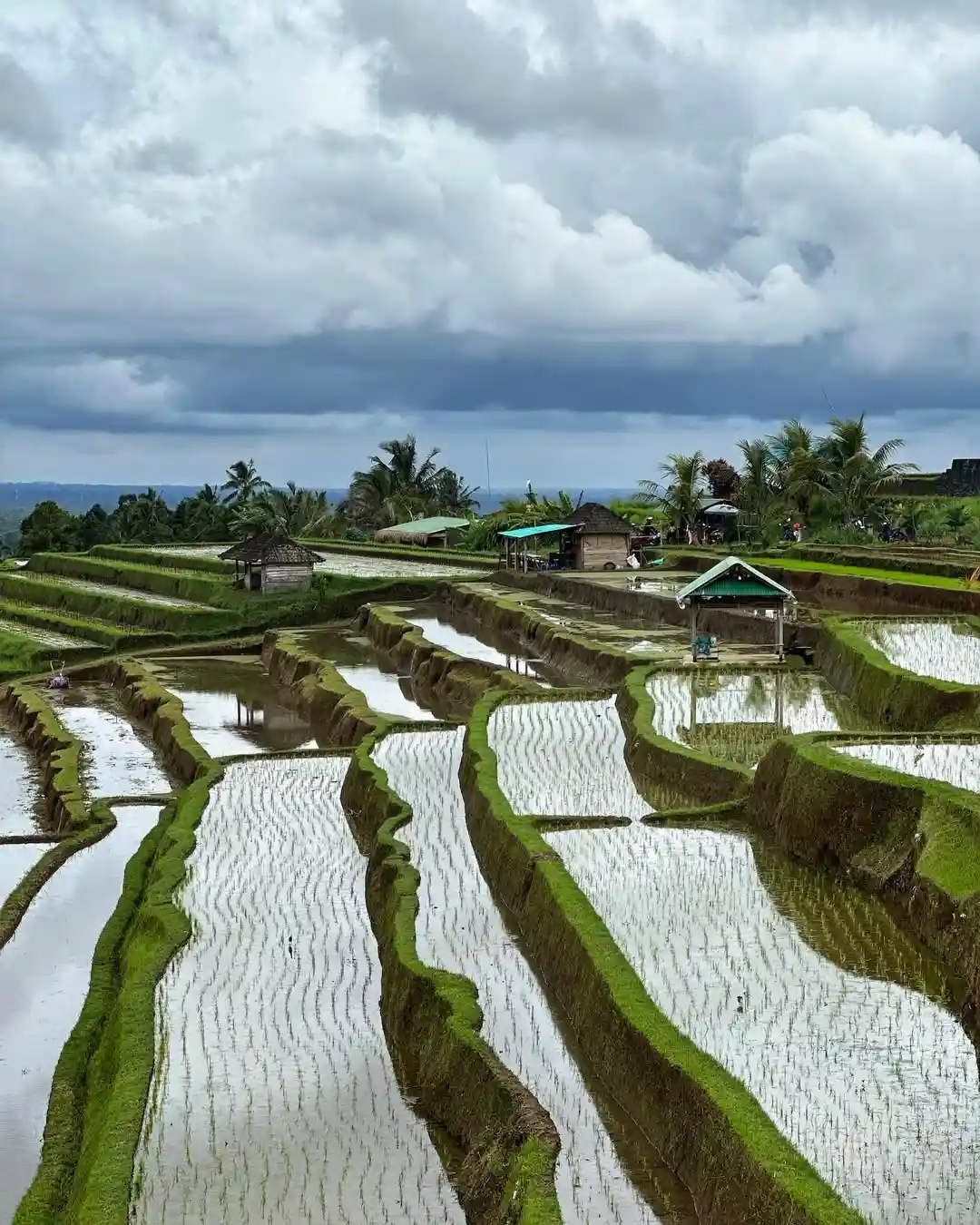
Jatiluwih sits in the mountains of Tabanan Regency, about 700 meters above sea level. The drive itself is scenic, winding through misty jungles and highland roads. Google Maps will lead you straight to the main parking area, from where you can walk or rent a bike to explore.
How to reach Jatiluwih Rice Terraces
Public transport doesn’t reach Jatiluwih, and Grab or Gojek rarely operate here. Your best options are:
- Private car with driver: Comfortable, flexible, and ideal for exploring terraces, temples, and waterfalls.
- Scooter: Cheap and flexible, but only for confident riders. About 1.5 hours from Kedungu, with scenic highland views.
Distances to Jatiluwih Rice Terraces
- Kedungu: 1h 20min (35 km)
- Canggu: 1h 50min (50 km)
- Ubud: 1h 30min (38 km)
- Seminyak: 2h 05min (55 km)
- Sanur: 2h 10min (58 km)
- Uluwatu: 2h 45min (75 km)
- Nusa Dua: 2h 50min (70 km)
- Kuta / Legian: 2h 10min (60 km)
Entrance fee & opening hours
Entry costs IDR 75,000 per person, supporting the local community and maintenance. Open daily from 6:00 AM to 7:00 PM, though the area itself isn’t fenced.
Best time to visit
Dry season (April–October) offers lush terraces and dry trails, while wet season (November–March) gives dramatic reflections and fewer visitors. Early morning is ideal for golden light and tranquility.
Activities and tours
- Walk the terraces: short loops or 2–3 hour trails
- Cycling tours: e-bikes or regular bikes for more coverage
- Meals with a view: local warungs and cafés along the terraces
- Nearby waterfalls: Yeh Hoo Waterfall is a short drive away
- Temples and hot springs: Batukaru Temple and Angseri Hot Springs
Tips for visiting
- Go early to avoid heat and enjoy best light
- Wear proper shoes; trails can be muddy
- Bring cash; cards are rarely accepted
- Respect farmers and stay on paths
- Pack a raincoat during wet season
- Download Google Maps offline due to patchy signal
Hotels near Jatiluwih
- Luxury: Aurora Cabins, Sang Giri Mountain Tent Resort, D’Wan Tea Mountain Side Villa
- Mid-range: Damara Villa, Padi Bali Cottages, Bhuana Agung, Keuma Villa, Dasa Vayu Retreat
- Budget: Adhi Jaya Suite, Anish Homestay
Restaurants near the terraces
- Jatiluwih Resto – near the main sign
- Bhuana Agung – terrace overlooking rice fields
- Gong Jatiluwih – relaxed local cuisine
- Green Talas & Batu Karu Kopi – casual, peaceful options
Jatiluwih vs Tegalalang
Jatiluwih: peaceful, authentic, vast, with active farming and subak culture.
Tegalalang: scenic but touristy, swings and souvenir stalls, convenient from Ubud for a quick stop.
Is Jatiluwih worth visiting?
Absolutely. For authentic Bali—tranquil landscapes, cultural heritage, and zero tourist traps—Jatiluwih is a must-see. Walk, cycle, eat with a view, or simply relax and enjoy the scenery.